|
|
HIGH TEMPERATURE ASYMMETRIC FLOW FIELD-FLOW FRACTIONATION
The most important Asymmetric Flow Field-Flow
Fractionation technique for the characterization of polymers at elevated temperatures is High Temperature Asymmetric Flow Field-Flow
Fractionation, which was invented and developed by
Postnova Analytics and Dow
Chemical in a joint research project. In 2006 the world’s first commercial High Temperature
Asymmetric Flow Field-Flow Fractionation was presented [1]. High Temperature
Asymmetric Flow Field-Flow Fractionation is a brand-new technology and has
not been described in the scientific literature ever before. High
Temperature Asymmetric Flow Field-Flow Fractionation technology marks a real
break-through in FFF science as it is using - the first time ever - a ceramic
membrane composite inside the Asymmetric Flow Field-Flow Fractionation
channel. This special membrane enables the user to access completely new
applications with Asymmetric Flow Field-Flow Fractionation and to overcome
the limitations of the traditionally used polymeric membranes. This membrane
technology in High Temperature Asymmetric Flow Field-Flow Fractionation can
be used for the characterization of high molar mass polymers at temperatures
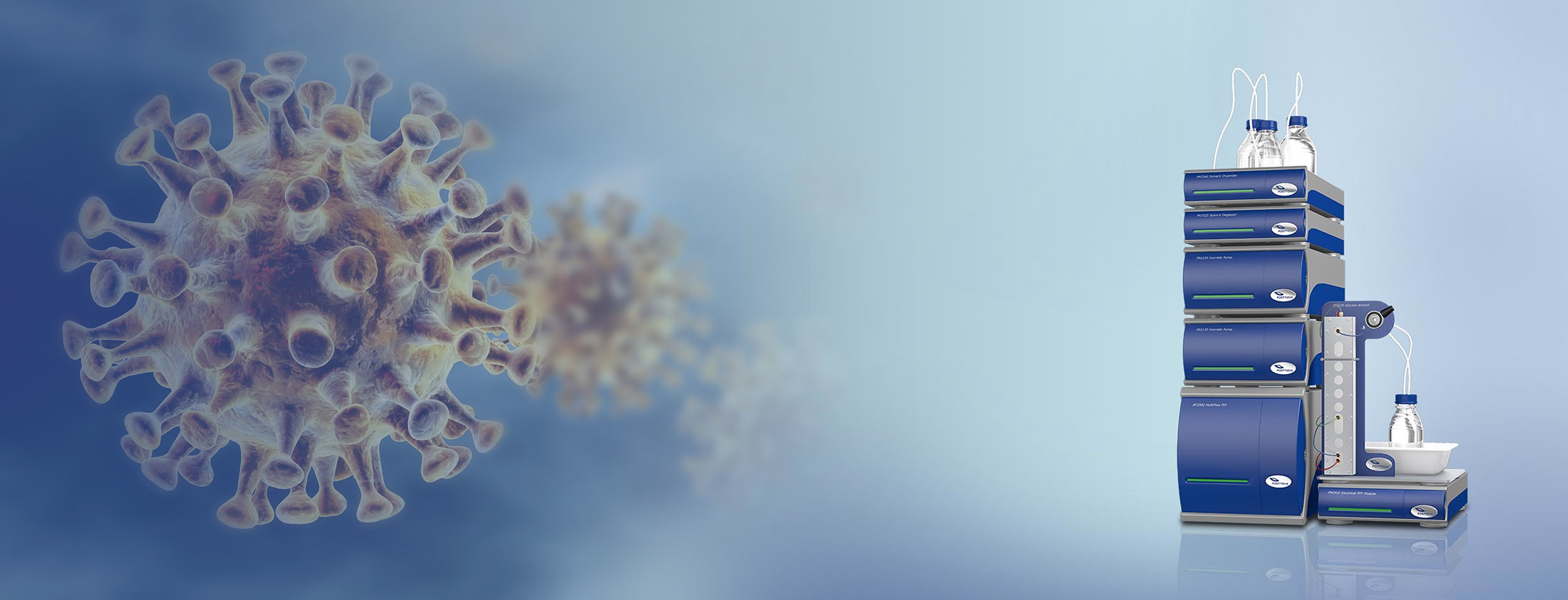
up to 220°C, such as polyolefin’s (polyethylene, polypropylene). A typical High Temperature Asymmetric Flow Field-Flow
Fractionation system is comprising of the eluent reservoir, the eluent pump, the
FFF module for cross flow control and data acquisition, the injector system,
the Field-Flow Fractionation channel and suitable High Temperature
Asymmetric Flow Field-Flow Fractionation detectors, which can be Light
Scattering, Infrared, RI and Viscometers. The sample injector, the High Temperature
Asymmetric Flow Field-Flow Fractionation channel and the High Temperature
Asymmetric Flow Field-Flow Fractionation detectors are located inside the
heated system. The High Temperature Asymmetric Flow Field-Flow Fractionation
is fully automated and controlled by the software, which also allows the
data evaluation and molar mass as well as radius calculations.
UNIQUE FEATURES OF HIGH TEMPERATURE ASYMMETRIC FLOW FIELD-FLOW FRACTIONATION
Ceramic Membrane Channel Cartridge
The channel cartridges used in High Temperature Asymmetric Flow Field-Flow
Fractionation are based on a new ceramic composite membrane technology. This
membrane is inert, can be used at high temperatures and can be regenerated
many times before it needs to be replaced.
Broad Molar Mass Separation Range at high Temperatures
Compared with High Temperature GPC, the separation in High Temperature
Asymmetric Flow Field-Flow Fractionation can also be performed for polymers
up to molar masses of
109 Da. No size exclusion effect is observed, making
High Temperature Asymmetric Flow Field-Flow Fractionation the ideal tool for
the separation of large and ultra-large polymers, macromolecules and
nanoparticles.
Gentle Separation Conditions
Because of the open channel and the absence of any stationary phase, the
separation can be performed under the absence of shear forces and stress to
the macromolecule. Typical High Temperature GPC problems, such as filtering/adsorption
effects, shear induced chain degradation and late elution effects, can be
avoided.
APPLICATIONS OF HIGH TEMPERATURE ASYMMETRIC FLOW FIELD-FLOW FRACTIONATION
Because of the extremely gentle separation conditions and the ultra-broad
separation range, High Temperature Asymmetric Flow Field-Flow Fractionation
(HTFFF) is the most advanced technology for the separation of high and
ultra-high molar mass polymers at elevated and high temperatures. High
Temperature Asymmetric Flow Field-Flow Fractionation can be used for
polymers, macromolecules and nanoparticles in the size range up to
109 Da
and up several µm particles size. Unlike High Temperature GPC (Gel
Permeation Chromatography), no size exclusion limit is restricting the upper
molar mass of the separated polymers. Polyolefin’s are one of the most
important groups of polymers which can be analyzed with High Temperature
Asymmetric Flow Field-Flow Fractionation, but other macromolecules with
higher molar masses can be investigated as well.
HIGH MOLECULAR WEIGHT LOW DENSITY POLYETHYLENE
|
Molar Mass by HTFFF |
Molar Mass by HTGPC |
 |
 |
| |
|
|
Radius of Gyration by HTFFF |
Radius of Gyration by HTGPC |
 |
 |
A comparison of High Temperature Asymmetric Flow Field-Flow Fractionation
and High Temperature GPC is done for High Molecular Weight Low Density
Polyethylene (LDPE). The data proves that the bimodal distribution shown in
the GPC results is only caused by the size exclusion limit of the column.
When using High Temperature Asymmetric Flow Field-Flow Fractionation also
the high molecular weight range of the Low Density Polyethylene can be
accessed. Only by using High Temperature Asymmetric Flow Field-Flow
Fractionation the “real” distribution of this sample can be discovered,
including the high molar mass fractions, which are missing in the High
Temperature GPC data. High Temperature Asymmetric Flow Field-Flow
Fractionation has an extended molar mass range up to
109 Da and the size
range goes up all the way into the micrometer range.
For more information about Asymmetric Flow Field-Flow Fractionation
contact Postnova Analytics via telephone, fax, email or visit our homepage
www.postnova.com !
_________________________________________________________________________________________________________
[1] H. DeJonge, E. Mes, T. Klein, R. Welz, “High Molecular Weight Polyolefin
Analysis by High Temperature Asymmetrical Flow Field-Flow Fractionation”,
Oral Presentation/Poster 1st ICPC Conference, Houston, USA, Oct. 15th-18th
(2006).
Flow FFF |
Asymmetrical Flow Field
Flow Fractionation | Thermal FFF
| Sedimentation FFF |
|
|